1. The Particular Nature of Deep Tech
Deep tech is often described as “high risk.” That’s true, but it doesn’t tell the whole story. Unlike many digital startups that scale quickly through apps and user growth, deep-tech companies are built on scientific or engineering breakthroughs. They emerge from labs, research institutions, and years of development. Whether in biotechnology, medical devices, energy storage, advanced materials, or climate technologies, progress takes time.
These ventures must prove their science works. They must pass regulatory hurdles, build manufacturing capacity, and test their solutions in real-world conditions. In Africa, where supply chains and technical infrastructure are still developing, those early steps can be even more complex.
The risk is concentrated at the beginning. But once the science is validated, the picture changes. Deep-tech companies often become highly defensible. Their intellectual property is stronger. Barriers to entry are higher. And the sectors they serve , health, energy, food systems, climate resilience, are long-term necessities, not passing trends.
2. In Africa, Deep Tech Is a Necessity, Not a Luxury
In Africa, this distinction is critical. The startup conversation over the past decade has been dominated by fintech and digital platforms. These sectors have delivered real gains in financial inclusion and access. But the continent’s most urgent challenges are structural: reliable energy, resilient healthcare systems, food security, climate adaptation, and local industrial capacity.
Deep tech addresses these foundations directly. When a local biotech company reduces reliance on imported diagnostics, it strengthens health security. When energy innovation improves storage or grid reliability, it supports industrial growth. When climate technologies protect crops or water systems, they safeguard livelihoods. Deep tech is not an optional layer of innovation. It is part of building economic resilience and long-term sovereignty.
The opportunity is clear. The question is: who finances it?
3. Why Catalytic Capital Matters
Traditional venture capital is built for speed. It works best in sectors where products can launch quickly and scale fast.
Deep tech rarely follows that path. Early stages are capital-intensive and uncertain. Companies need funding long before revenues appear, to prove concepts, secure approvals, and refine their technology. For many conventional investors, that timeline simply doesn’t fit their model.
This is where catalytic capital becomes essential. Catalytic capital is designed to take on early risk that others cannot. It supports proof of concept, pilot projects, and regulatory milestones. It is often more patient and more flexible. Its goal is not to crowd out private investors, but to prepare ventures for them. By absorbing early uncertainty, catalytic capital makes deep-tech ventures investable. It builds the bridge between scientific discovery and commercial scale. Once key milestones are reached, traditional capital can follow with greater confidence.
In this sense, catalytic capital doesn’t replace venture capital. It sequences it.
4. Beyond Capital: Building the Pipeline and the Champions
Capital alone is insufficient. Deep-tech ecosystems require structured pipelines- from research to venture formation to market deployment. Africa has scientific talent and growing research output, but often lacks the translation infrastructure that turns discovery into scalable companies.
Scientific founders need commercialization support; startups need testing facilities, regulatory guidance, industry partners, and early customers. Without these enablers, promising innovations remain in journals instead of reaching markets.
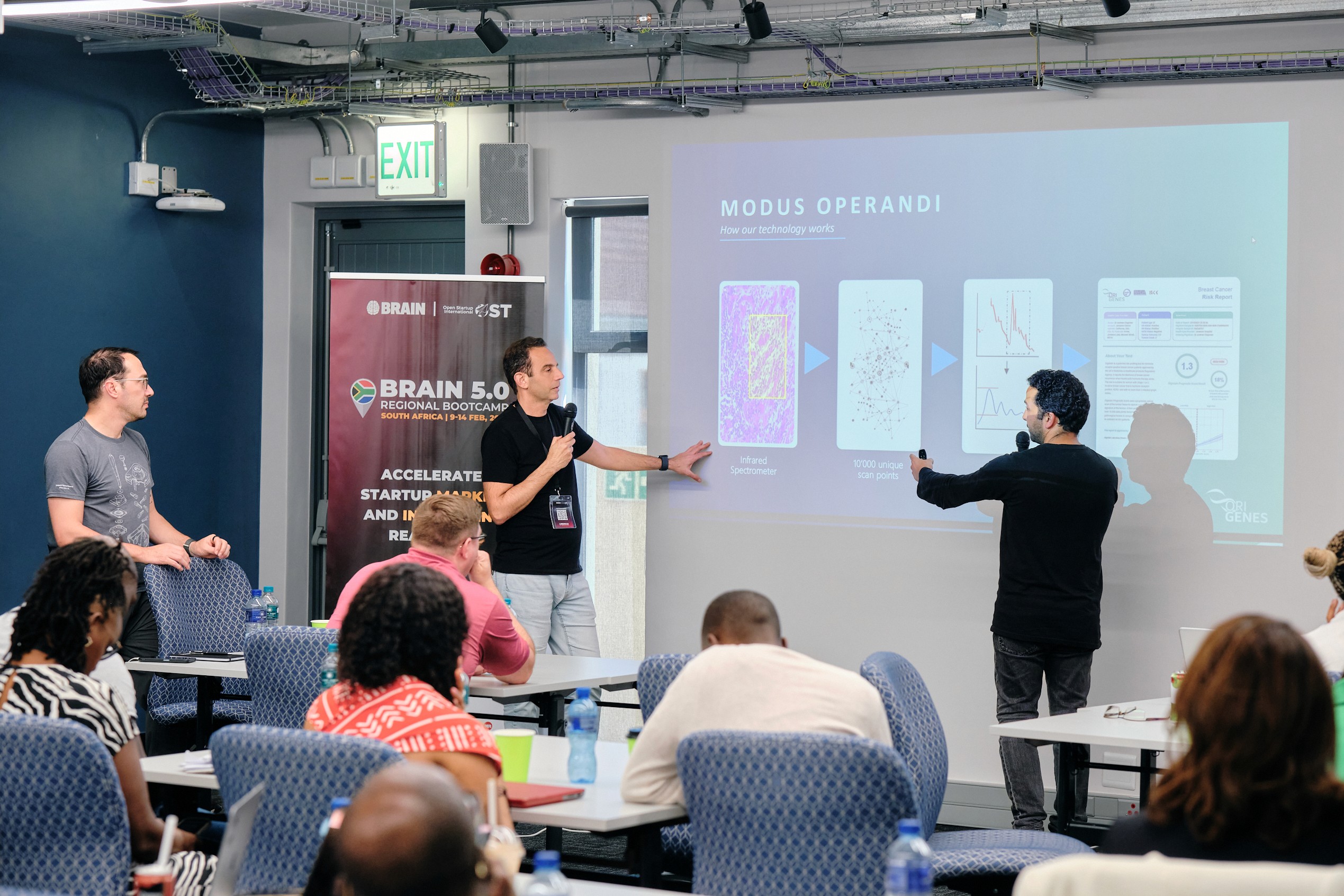
Catalytic capital is most effective when embedded in a deliberate ecosystem strategy that connects science, entrepreneurship, and investment. This is the ambition of OST’s Bridging Innovation and Research (BRAIN) program: inspiring scientists to pursue entrepreneurial pathways, accelerating African deep-tech champions tackling structural challenges, and building bridges across North and Sub-Saharan Africa, and globally, to unlock partnerships, markets, and capital.
For Africa to shift from adopting frontier technologies to producing them, it will require not just funding, but coordinated ecosystems capable of sustaining deep-tech champions over the long term.
—
Eya Chemli
Head Of Partnerships & Fundraising - OST