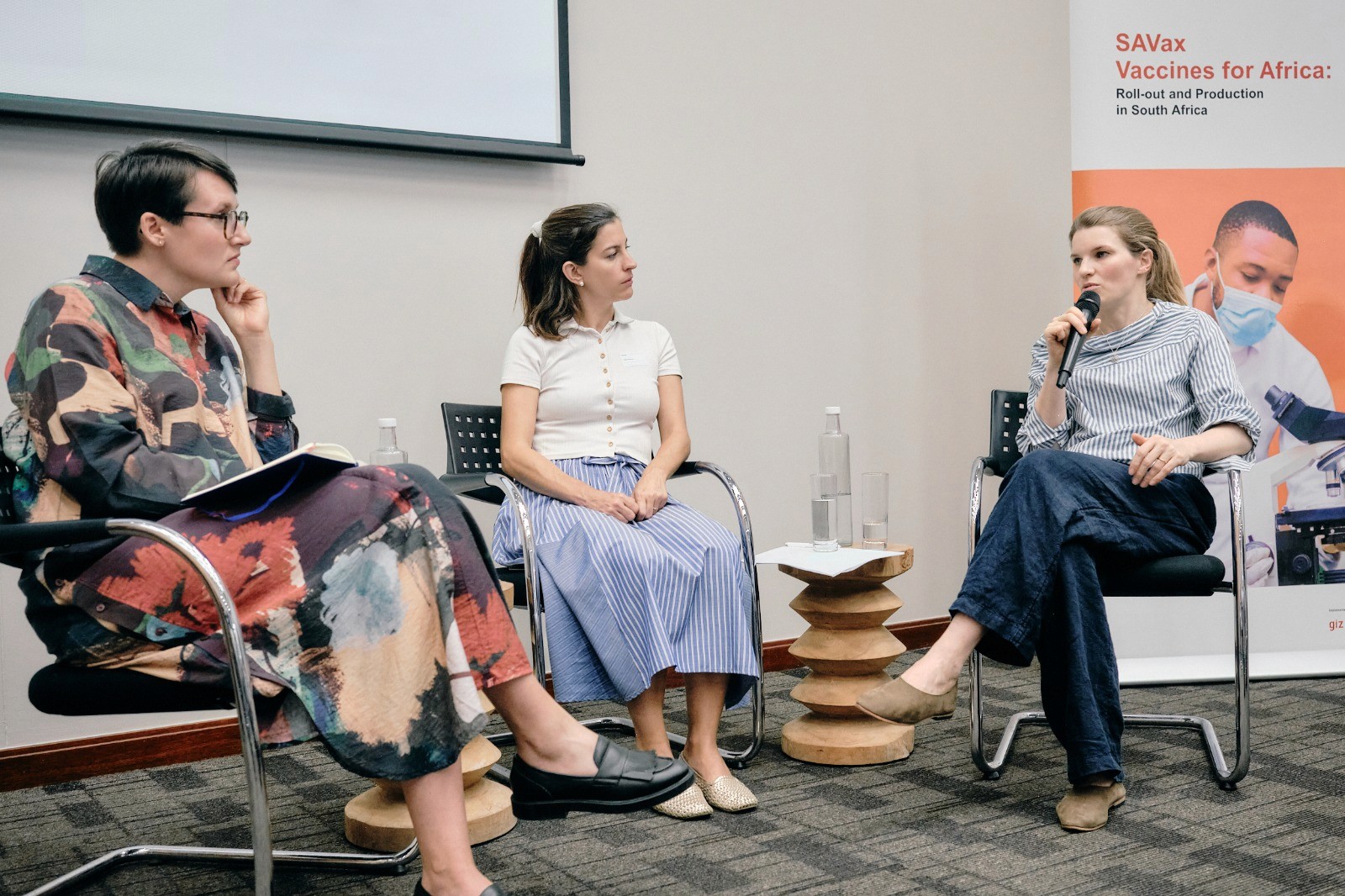
As African startups increasingly seek pathways into global markets, Europe and Germany in particular has emerged as a strategic destination for scale, credibility, and long term growth. At a recent Open Startup International (OST) x GIZ joint session, leaders from the European Union, Open Startup International, and GIZ offered a candid, systems level view of what it truly takes to access European markets beyond capital alone.
Moderated by Laura Pelzman (GIZ), the session brought together policy, investment, and ecosystem perspectives, followed by a Pan African deep tech and biotech discussion and a curated networking experience.
Europe as an Opportunity Landscape
The session opened with Julie Timon from the European Union, who framed the opportunities and access points into the European market for African startups. She emphasized that Europe is not a single, monolithic market, but a highly structured environment shaped by regulatory alignment, sector priorities, and institutional partnerships. Access, she noted, increasingly depends on understanding how trade facilitation, development finance, and innovation policy work together particularly in priority sectors such as health, biotech, climate, and deep tech.
Julie’s remarks set the foundation for the discussion. Europe is open to innovation from emerging markets, but entry is deliberate, rules based, and best navigated through institutional channels.
Accessing Germany’s Deep Tech Ecosystem
Building on this foundation, Kate Hach, Senior Advisor for Partners and Strategy at Open Startup International (OST), shifted the focus from opportunity to execution. Her presentation explored Germany’s deep tech ecosystem, highlighting both its strength and its complexity.
Kate underscored that Germany offers one of Europe’s most powerful platforms for deep tech innovation particularly in AI, robotics, biotech, climate, energy, and advanced manufacturing but access is not easy. The ecosystem is dense, credential driven, and highly relationship oriented, making networking essential rather than optional.
A central theme of her remarks was the importance of affiliation. Successful entry into the German startup ecosystem often requires formal connections to entrepreneurship centers attached to universities and participation in dedicated national and EU backed programs designed to onboard international founders. These institutions act as trusted gateways, providing credibility, regulatory fluency, and access to capital and industry partners. Cold entry is rare. Structured pathways matter.
Networking as Infrastructure
Both speakers reinforced a critical insight. In Europe and especially in Germany, networking functions as infrastructure. Relationships serve as validators, risk reducing mechanisms, and accelerators of trust. For African founders, success is often determined not only by the strength of the technology, but by who is willing to sponsor, introduce, and advocate within the ecosystem.
These themes carried into the Q and A session on Pan African deep tech and biotech, where founders engaged on questions of scalability, regulatory navigation, and how African startups can position themselves as long term European partners rather than transactional entrants.
From Dialogue to Connection
The session concluded with speed networking in a courtyard setting, bringing together founders, investors, MIT Sloan Executive MBA students, ecosystem builders, and institutional partners over wine and light bites. The informal environment reflected the session’s broader message. Meaningful market access is built through conversation, trust, and sustained presence.
Key Takeaway
Europe and Germany in particular offers significant opportunity for African deep tech and biotech startups, but access is structured, institutional, and relationship driven. Founders who invest in the right networks, affiliations, and programs are far better positioned to turn opportunity into durable scale.
—
By Trenika Fields
MIT Sloan EMBA ‘26