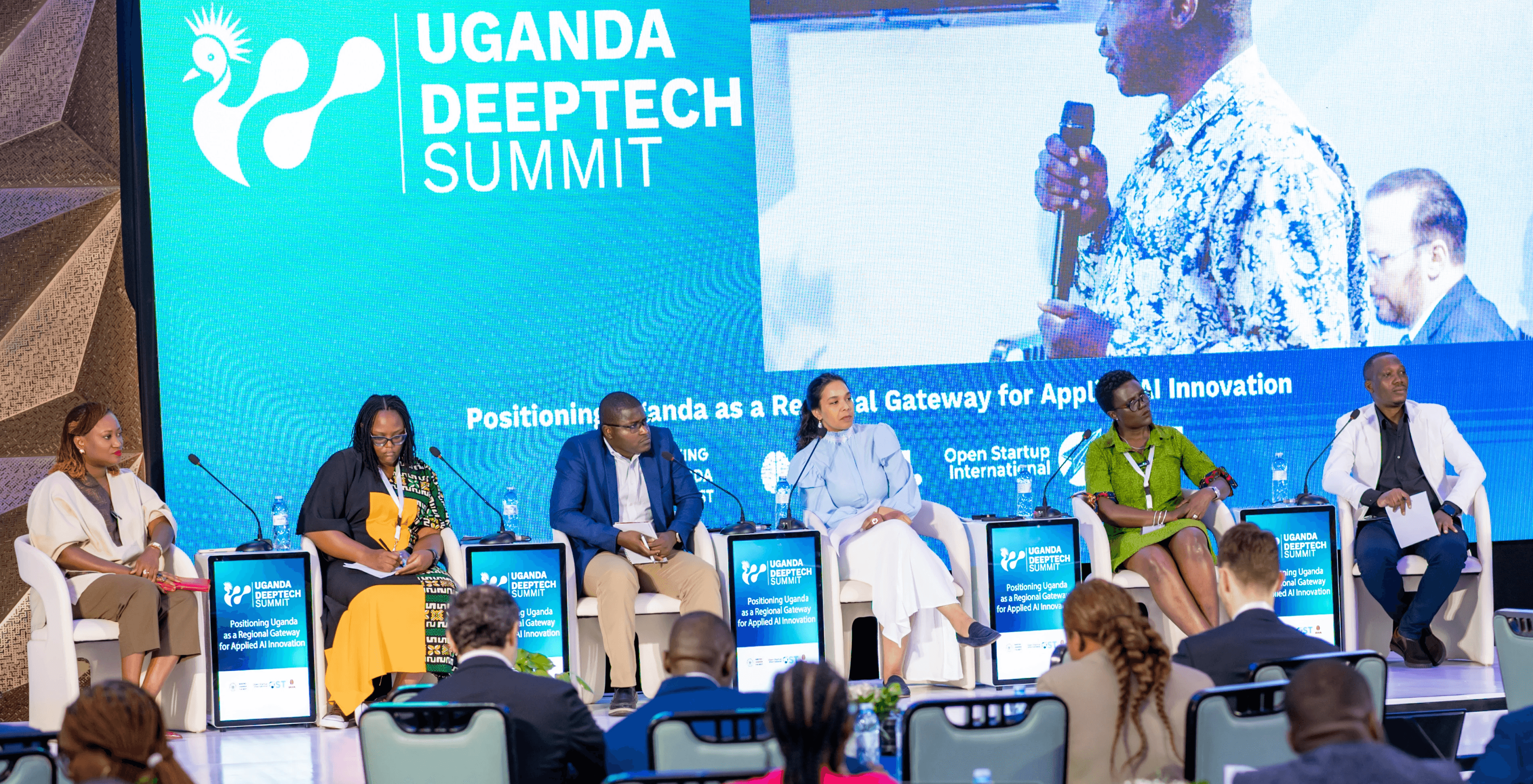
Introduction: Uganda's Education Reckoning
Uganda enters the AI era with a paradox at its core. The country is home to one of Africa's longest-running AI research programmes, Makerere University's AI Lab, active since 2008, alongside pioneering work in local-language NLP (Sunbird AI), the continent's first dedicated MSc in AI (Busitema University), and a growing ecosystem of student developers and community-led learning networks. And yet the 2025 ITU Uganda National AI Landscape Assessment tells a sobering story: "lack of skills" is cited as the single greatest barrier to AI adoption by 48% of stakeholders, fewer than 1% of higher education graduates complete a science or technology degree, and 83% of institutions report having no awareness of any national AI policy or framework.
The gap between what Uganda has and what it needs is not primarily a talent gap, it is a pipeline gap. Talent exists. It is underdeveloped, unevenly distributed, and systematically disconnected from the markets and sectors where it could create the greatest value. Uganda's government has set an ambitious target of a $500 billion GDP economy. Getting there will require converting a generational youth demographic advantage into a workforce capable of building, deploying, and commercializing AI, not just consuming it.
48% | <1% | 83% |
|---|---|---|
cite lack of AI-ready skills as the #1 barrier to adoption | of higher education graduates are in science & technology | of institutions unaware of any national AI policy or framework |
Sources: Uganda National AI Landscape Assessment (ITU, 2025); National Council for Higher Education, State of Higher Education and Training in Uganda.
Four Structural Gaps and Where This Paper Addresses Each
The Pillar 3 sessions at the Summit identified four interlocking gaps that define Uganda's education-to-employment challenge. Each is structural, not incidental, and each appears in the solutions discussed across the four panels:
1- The Systemic Skills Barrier, addressed in Sections 1 & 2
Less than 1% of higher education graduates specialize in science or technology. Uganda screens only 2,000–3,000 students for national mathematics competitions, compared to 60,000 in Rwanda, leaving vast reserves of mathematical talent unidentified and undeveloped. The education system, from primary school through university, remains oriented toward memorization (Bloom's Taxonomy levels one and two) rather than the problem-solving, and creative/complex reasoning that AI development demands. Section 1 (K–12) and Section 2 (Higher Education) address the pedagogical and structural interventions needed to widen and deepen the talent base.
2- The Curriculum–Industry Mismatch, addressed in Sections 2 & 3
26.7% of stakeholders identify the total absence of AI-focused curricula as a primary bottleneck. Universities produce graduates trained in basic digital literacy while the private sector increasingly requires intelligent system design, data engineering, and applied machine learning. The mismatch is compounded by slow reform cycles: a curriculum written today takes years to reach students. Sections 2 and 3 explore how work-integrated learning, industry co-teaching, and agile short-course programmes are bridging this gap faster than conventional reform can.
3- The Commercialization Valley of Death, addressed in Sections 2 & 5
33.3% of institutions report that the absence of hands-on, deployment-oriented training prevents university research from reaching the market. Uganda has pockets of deep excellence, Makerere's AI Lab has produced crop-disease diagnostics, multilingual education tools, and health applications, but the infrastructure to translate these into scalable products is largely missing. Capital funding models designed for consumer tech timelines are misaligned with deep tech translation cycles. Institutional silos prevent shared platforms, co-development ecosystems, and data-sharing frameworks from forming. Section 2 examines what bridge mechanisms work, and Section 5 frames the policy conditions needed.
4- The Inclusion and Scale Risk, addressed in Sections 3 & 4
Uganda's AI development is currently concentrated in Kampala and a handful of research institutions. Rural youth, women, and people with disabilities remain largely outside the pipeline. 700,000 Ugandans enter the job market annually; only 258,000 find formal employment. Without structured, geographically distributed interventions, the AI transition will widen existing inequalities rather than close them. Sections 3 and 4 cover accelerated skilling models and community-based learning networks that are actively pushing into underserved areas.
What Uganda Already Has
The conversation at the Uganda DeepTech Summit was grounded in existing Ugandan assets that often go unrecognized in continental comparisons. These are not aspirational, they are operational:
– Makerere AI Lab & Mak-CAD: Running since 2008, Uganda's premier AI research hub has produced deployable ML diagnostics for agriculture, health, and livestock; AI-for-education tools (LearnBridge); and graduates now deployed across leading African deep-tech startups.
– Busitema University & IUIU: Busitema launched Uganda's first dedicated MSc in AI; IUIU has institutionalised AI into its pedagogy and established the Motion Analysis Research Laboratory (MARL) to tackle societal problems.
– Sunbird AI: A local non-profit that has built the SALT dataset covering six Ugandan languages, demonstrating that Uganda can develop high-value, sovereign linguistic infrastructure, not just consume models built elsewhere.
– Data Science Africa (DSA): Regularly hosts pan-African summer schools and workshops in Uganda, equipping students and professionals with advanced machine learning skills and connecting them to global networks.
– Zindi Uganda: 2,500 registered data scientists and AI developers; 14 university ambassadors; hackathons and workshops running across Gulu, Kabale, and other regional universities, demonstrating that community-driven talent development can reach beyond Kampala.
These assets share a common characteristic: they were built with limited resources, against structural headwinds, by individuals and institutions that refused to wait for systemic reform. The question this paper addresses is how to scale them, and what complementary interventions, from community learning to policy reform, are needed to turn pockets of excellence into national-scale readiness.
"Uganda has a once-in-a-generation opportunity, not just to train and skill AI talent, but to define how African AI is developed, built, and monetized. If we get it right, Uganda's talent will contribute to the next generation of African development and the global south as a whole."
The five sections that follow draw on testimony from education leaders, educators, entrepreneurs, platform builders, and policymakers across the Summit's Pillar 3 sessions. Each section traces a level of the education pipeline, identifies the specific gaps that appear there, and surfaces the solutions, from primary school mathematics to university reform to accelerated bootcamps to informal community networks, that participants argued are ready to be scaled.
1- Foundational Learning: Getting the Basics Right (K–12)
Every panelist traced the skills gap to its roots: a primary and secondary school system still oriented towards memorization over reasoning. Teachers train students to recall and reproduce, Bloom's Taxonomy levels one and two, and hand them to universities expecting creativity. The cycle perpetuates itself because teachers teach the way they were taught.
Teacher Capacity: The Multiplier No One Can Skip
The North Green School (Kampala) and Musizi University co-founder, speaking from 20 years of practice, identified teacher development as the single highest-leverage intervention. If teachers are not equipped with AI literacy and new pedagogical frameworks, no curriculum reform on paper will translate to changed outcomes in the classroom. Two studies (here and here) led by the World Innovation Summit for Education (WISE) in collaboration with MIT and the University of Southern California confirmed that the gap between teachers' current AI knowledge and what students need is significant and measurable.
– Professional development (PD) in AI literacy for teachers is the priority starting point, before device procurement or platform deployment.
– Go My Code (operating across 9 African countries) runs a 'Teacher Academy' where new programmes are validated by teachers before reaching students; top teachers are sponsored for NVIDIA instructor certifications to create a network effect.
– Subject-matter experts are increasingly being brought into classrooms to co-teach alongside faculty, a model that also works at university level.
– Teachers who are resistant to AI tools must be understood, not coerced: their reluctance often reflects legitimate concerns about academic integrity and their own assessments.
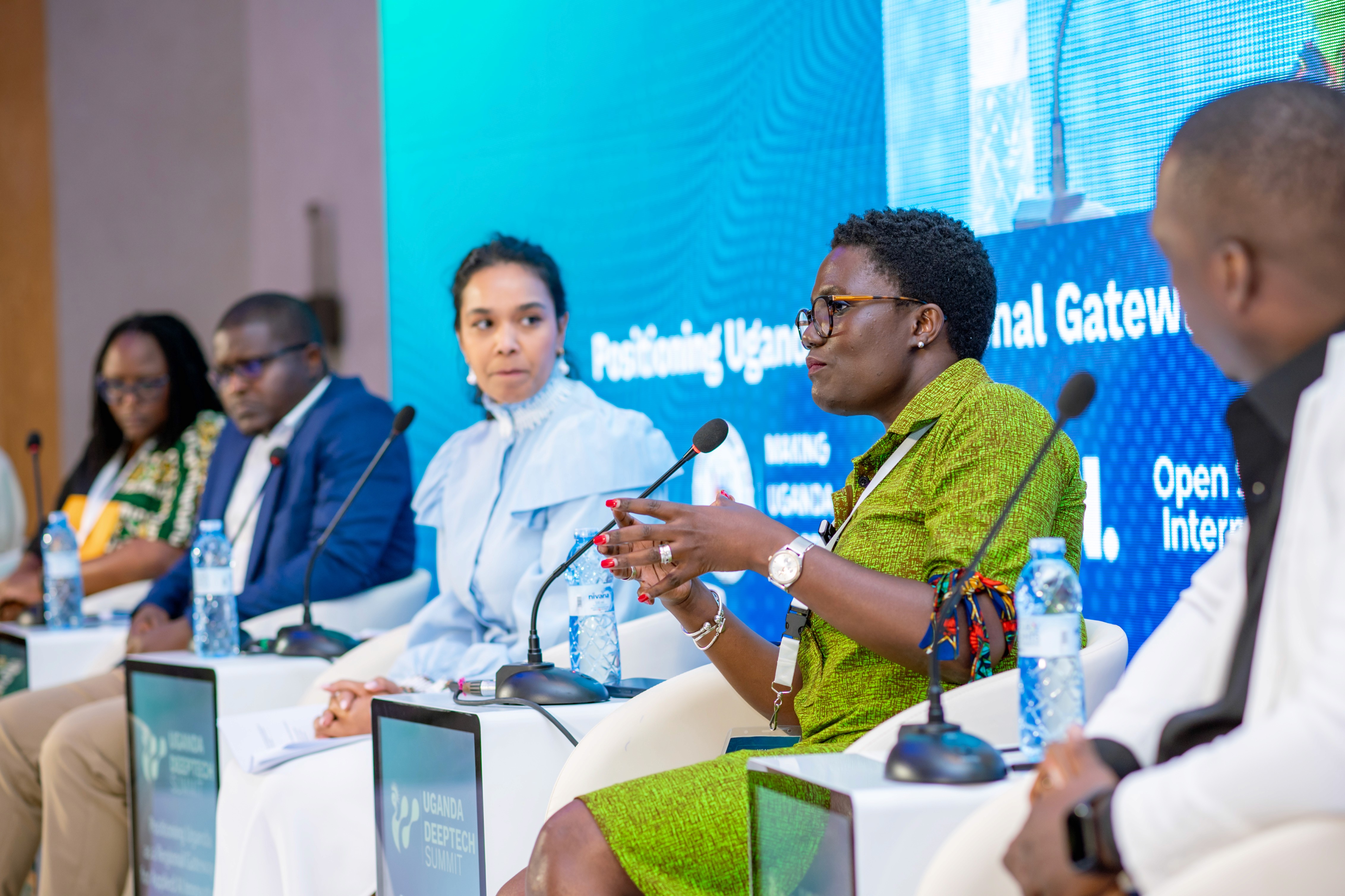
Early Exposure: Students as Builders, Not Just Users
A high school student in Kampala helped design the digital and plant-technology systems of what became the world's first carbon-market-certified mini-grid, a $10 million project. The same student is now a member of a World Economic Forum platform. When young people are placed in charge of real projects alongside PhDs and engineers, they teach adults as much as they learn. Makerere University's AI lab is already demonstrating this at scale: deploying AI tools to 35,000 primary school students in northern Uganda, including P7 pupils sitting final exams who had never touched a digital device, with content built in 31 Ugandan languages. The S6 gap year (the period between secondary school completion and university entry) is an underutilized window for exactly this kind of structured, project-based early exposure.
"We designed for 2040. Every empty seat in this room should have a high school student in it."
The Mathematics Infrastructure Gap
The African Olympiad Academy (AOA), a full-scholarship school based in Kigali, made the case starkly: Africa as a continent, 1.5 billion people, averages the same number of International Mathematical Olympiad medals per year as Singapore, a nation of six million. Foundational mathematics, treated as problem-solving rather than rote procedure, is the gateway to AI development. AOA's argument: the continent cannot build sovereign AI on Python courses alone; it needs deep mathematical thinkers who can redesign how technology works. For Uganda specifically, the gap is quantifiable: the country currently screens only 2,000–3,000 students for national mathematics competitions, compared to 60,000 in Rwanda, a country with one quarter of Uganda's population. Scaling national Olympiad and science competition programmes is a low-cost, high-signal intervention that ministries can act on without waiting for curriculum reform. Participation rates in mathematics and science competitions should be treated as a leading indicator of AI-pipeline health.
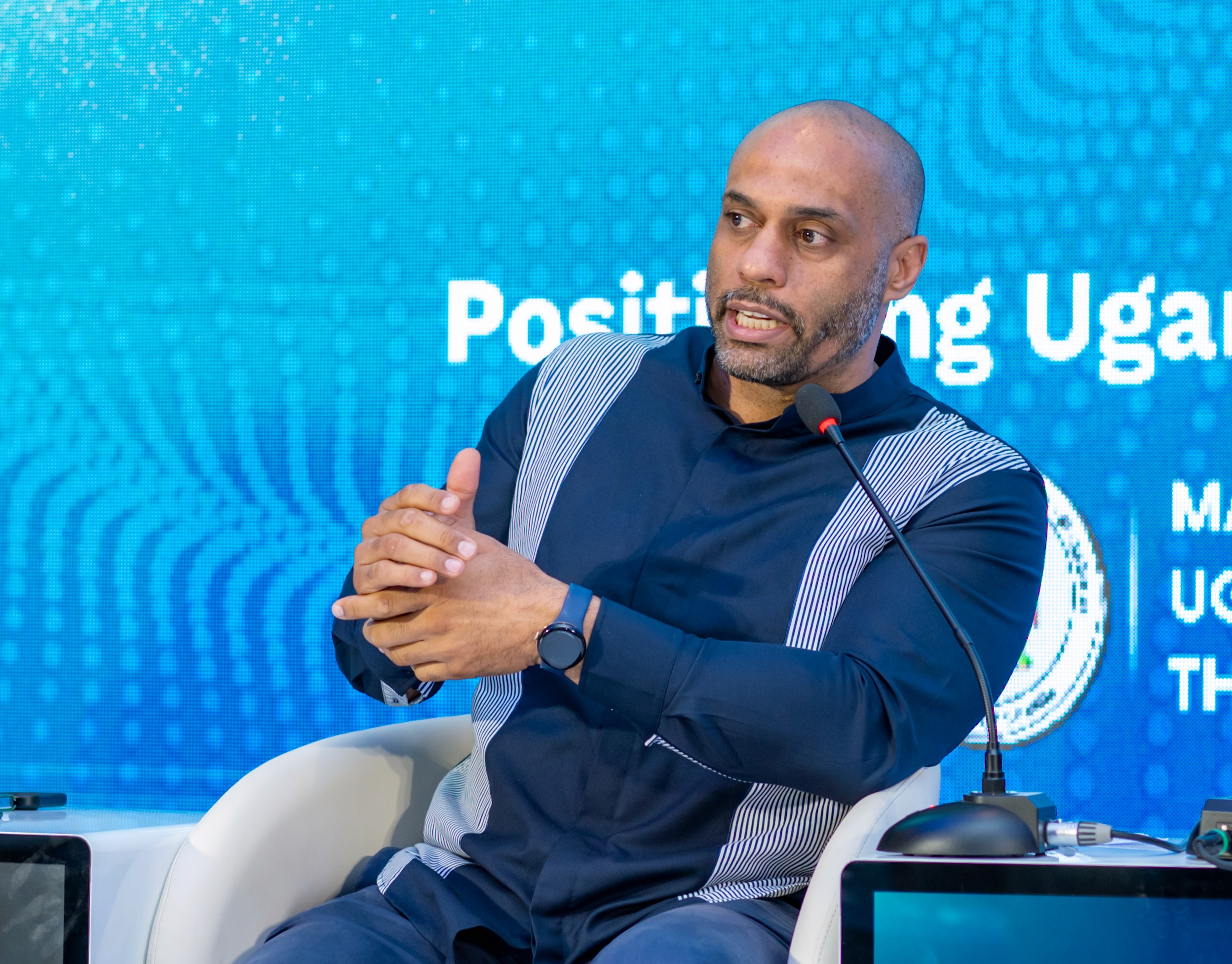
2- Higher Education: Closing the Conversion Valley
Uganda's universities produce graduates with strong theoretical knowledge, models, papers, proofs, but graduates rarely arrive at industry with deployable skills. Panelists described this as the 'conversion crisis': even where STEM enrolment is growing and AI policy frameworks exist on paper, the pipeline from graduate to practitioner remains broken. The 2025 landscape assessment confirms that 33.3% of institutions identify the absence of practical, hands-on training as the specific mechanism of failure.
The Structural and Interpersonal Barriers
Two distinct problems sit inside the conversion gap. The structural issue is resources: GPUs, computer access, and funding for translation pipelines. Deep tech has a longer commercialization cycle than consumer or ad tech, and funding timelines rarely match. Government has a role in bundling and advocating for shared compute infrastructure that multiple institutions can access without individual capital outlay.
The interpersonal issue is incentives. Professors are not entrepreneurs and expecting them to be is a category error. A more productive model brings entrepreneurs and academics into shared spaces on campus, not to turn professors into startup founders, but to create genuine collaboration between people with different but complementary skills and motivations.
Work-Integrated Learning as the Bridge
African Institute for Mathematical Sciences (AIMS) operating across six African countries, moved from traditional internships to 'work-integrated learning' (WIL): four months of coursework followed by six months embedded in companies, solving real challenges, not making coffee. Around 8% of participants are hired directly by their placement company. Crucially, Ugandan students from this programme are now working in Uganda's banking sector on systems they helped build, a direct counter to brain-drain concerns. The American University in Cairo described a comparable shift: away from curriculum overhaul (which takes years) toward integrating experiential, challenge-based, and community-based learning within existing frameworks, and deliberately bringing industry practitioners into classrooms.
Curriculum Agility Without Full Reform
Multiple voices agreed that waiting for formal curriculum reform is too slow a response to a sector moving as fast as AI. The practical alternative: retrain the facilitator. Faculty members who continuously update their own knowledge through peer exchanges, industry connections, and crossinstitutional exposure change what is delivered in the classroom even when the catalogue entry stays the same. The Education Collaborative at Ashesi University (Ghana) runs faculty exchange programmes specifically for this: not research exchanges, but co-teaching exchanges.
"Curriculum is just what is written down. The facilitator is what gets delivered."
A free public diagnostic toolkit developed by WISE as part of its study with The Education Collaborative allows any university to assess its Digital and AI adoption maturity. Given that 83% of Ugandan institutions currently report no awareness of the national AI policy framework, this is a practical first step that costs nothing but institutional will.
3- Workforce Development: Market-Ready at Speed
In the time it takes a university to produce a graduate, a well-designed vocational programme can produce five cohorts. Uganda enters 700,000 young people into the job market every year; only 258,000 find formal employment. Closing that gap requires faster, more targeted pathways than fouryear degrees alone can provide and several organizations represented at the Uganda DeepTech Summit are demonstrating this at scale.
The Accelerated Skilling Model
Go My Code (Tunisia, Algeria, Morocco, Senegal, Côte d'Ivoire, Kenya, 9 countries, 35 campuses) trains 15,000 students per year and places over 4,000 in jobs annually through six-to-eighteen-month programmes with curriculum revised every six months. In Tunisia, the ICT sector grew from 2.5% to 7.5% of GDP over eight years in parallel with scaled tech training, a trajectory Uganda's government should study as it pursues its own economic targets.
Blossom Academy (Ghana, Nigeria, Rwanda) runs a three-to-four-month intensive followed by a sixmonth paid internship, achieving an 85% career placement rate within 45–90 days of completion. 58% of graduates identify as women. The highest-earning alumna earns $6,500 per month remotely from Ghana. Blossom has now partnered with the UN World Food Programme to develop an 'AI for Food Security' programme in Ghana, a model directly applicable to Uganda's agro-industrialisation priorities under the national ATMS strategy.
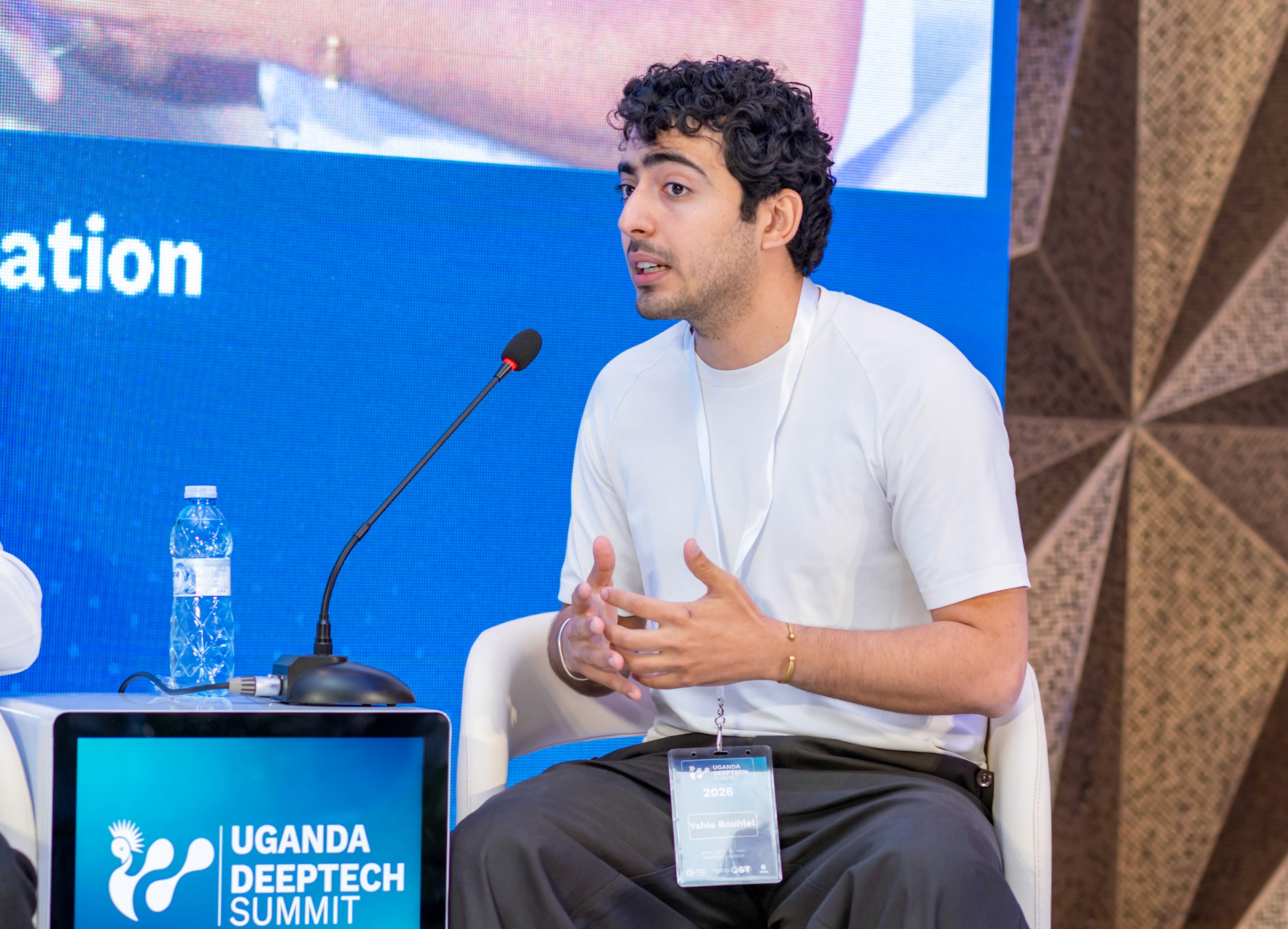
What Employers Actually Signal
Panelists with direct hiring experience converged on four competencies employers consistently priorities, and only one is strictly technical:
– Critical thinking, complex reasoning and problem-solving under uncertainty
– Self-management: grit, emotional regulation, agency
– Communication and collaboration
– Digital fluency (the only hard skill on the list)
Employers want evidence of impact, not credentials: someone who, on a Saturday night with limited resources, figures out what is broken and fixes it. This has implications for how Uganda's universities and short-course providers structure assessment moving away from examinations and toward project portfolios and demonstrated deployments.
Paid Internships, Leadership, and the Exposure Stack
Blossom's early and counterintuitive insight: paid internships combined with deliberate leadership development are what drive retention after placement. Technical skills get candidates in the door; soft skills and personal branding determine whether they stay. Both Blossom and Go My Code build systematic LinkedIn and portfolio visibility into their programmes because employers find candidates there before a formal placement even happens.
Zindi, Africa's largest data science and AI platform, with 2,500 members in Uganda and 14 university ambassadors now running events across Gulu and beyond, takes a community-based approach: 500+ industry-sponsored competitions surface the top performers naturally, lowering hiring risk for organisations and giving talent verifiable proof of work. The government of Togo hired 20 candidates directly from a single Zindi challenge; the model is replicable for Ugandan government agencies and parastatals.
AI-Augmented Skills, Not AI-Replaced Jobs
A recurring and important clarification: AI is automating tasks within jobs, not eliminating jobs wholesale. Go My Code's response is to remove 30–40% of curriculum content that is now automated and replace it with AI tools and techniques. The job titles look the same, but what they cover has shifted. New roles, AI engineers, autonomous agent builders, prompt architects, represent net additions to the market, not substitutions.
"AI is replacing tasks, not jobs. A designer still designs, but 40–60% of the individual tasks within that role are now automatable."
4. Informal and Community Learning: Reaching the Edges
Formal pipelines, schools, universities, bootcamps,cannot reach everyone, and in Uganda's context, where talent is distributed across 146 districts with vastly unequal infrastructure, communitydriven learning is not a supplement to the system. It is a significant part of the system.
AI Clubs and Community Chapter Networks
Deep Learning Indaba operates through 47 chapters across Africa, including Uganda. University AI clubs, established independently of, and sometimes ahead of, formal curricula, provide mentorship, weekly meetups, and connections to global experts in universities where no AI faculty may exist. At Kabale University in western Uganda, students developed an agent-based accidentresponse model for a local road-safety problem. The Indaba X AI Research Lab now provides a postgraduation pathway for the most promising participants. Eric, Zindi's Uganda ambassador, has singlehandedly onboarded 13 universities onto the platform, his WhatsApp map tracing journeys across the country is a vivid illustration of what motivated individuals can accomplish within an ecosystem that supports them.
Motivation Over Instruction
One of the most candid observations of the Uganda DeepTech Summit came from Gab'i, an AI-first talent platform: the continent does not have a skills problem, it has a motivation and access problem. Nobody taught Ugandans to use Android or WhatsApp; the technology spread because it was useful and the benefit was visible. The implication for AI skilling: demonstrate concrete financial benefit first, then provide access. Skilling follows motivation, not the other way around.
AI Literacy Alongside AI Building
The panel drew an important distinction between AI builders (engineers, data scientists) and AI users (everyone else). Both matter. Blossom launched a Corporate Training division specifically to close the AI literacy gap at the decision-maker level, because government officials who do not understand how AI products are built will continue contracting foreign providers and be unable to assess local alternatives. For Uganda, where procurement decisions for digital systems are made overwhelmingly by non-technical officials, this literacy gap has direct economic consequences.
"Talent is distributed equally. Opportunity is not."
5. Cross-Cutting Themes and Calls to Action
Data as Uganda's Competitive Advantage
Uganda's AI edge is not compute, it is data. High-quality, domain-specific, locally generated datasets in 31 Ugandan languages, agriculture, health, and education are a competitive moat that no external actor can simply replicate. Sunbird AI's SALT dataset is a proof of concept; the policy question is how to create incentive structures for data creation at scale, from teachers, doctors, and farmers whose tacit expertise can be packaged into training assets that benefit both research and commercialization.
Brain Circulation, Not Brain Drain
Whether a Ugandan AI engineer is based in Kampala or Cambridge matters less than what they are contributing to. The more urgent question is whether Uganda's ecosystem, pay, infrastructure, networks, and the quality of problems to work on, is compelling enough to attract diaspora talent back or retain graduates before they leave. Several speakers rejected the brain-drain framing in favor of 'brain circulation': talent that builds skills abroad and contributes remotely in ways that benefit the local economy or returns with networks and experience.
Decolonizing the Technology Stack
The African Olympiad Academy raised a structurally challenging point: training Ugandans to clean datasets and prompt Western models makes other people wealthier while embedding foreign systems deeper into the country's infrastructure. The aspiration must be sovereign AI, built on African mathematical talent, trained on African data, serving African needs. That requires building mathematics departments and research capacity, not only prompt engineers.
Recommendations by Level
– K–12: Prioritize teacher AI literacy before device or platform investment. Pilot student apprenticeships in real infrastructure projects during the S6 gap year. Scale national mathematics and science Olympiad participation, from 2,000 to 20,000+ screened students, as a talent pipeline signal.
– Higher Education: Adopt the free AI maturity diagnostic before building new infrastructure. Institutionalize work-integrated learning with mandatory industry placements. Create faculty co-teaching exchanges across Ugandan and regional institutions.
– Technical and Vocational Education and Training (TVET): TVET institutions offer one of the fastest, most direct routes from learning to employment, and integrating AI and digital skills into existing TVET curricula, rather than treating them as a separate track, can rapidly expand the pool of job-ready talent in priority sectors such as agro-processing, energy, and health. Governments and development partners should increase funding for AI-enabled TVET programmes, support TVET–industry partnerships that guarantee pathways to employment, and work to remove the persistent stigma that positions vocational training as a lesser alternative to university education.
– Workforce: Subsidize accredited short-course programmes aligned to the ATMS strategy pillars. Mandate and fund paid internship ecosystems. Support Zindi-style industry-sponsored competition platforms to surface verified talent and reduce hiring risk for local employers.
– Informal: Support Deep Learning Indaba chapters and AI community networks to operate across all regional universities. Invest in AI literacy programmes for government and private sector decision-makers.
– Policy: Create funding models matched to deep tech translation timelines, longer than consumer tech, requiring patient capital. Build shared compute and dataset infrastructure accessible to universities and startups without individual capital outlay. Establish incentive structures for high-quality data creation by domain practitioners.
—
Selma Talha-Jebril
Director, Research and Policy